October 22, 2026
AUTHOR Inside Practice
Inside Practice launches Inside Legal Tech Risk conferences in New York and London, alongside a dedicated website connecting technology risk reporting with the workflows, decisions and responsibilities behind legal work.
The risk sitting between the systems
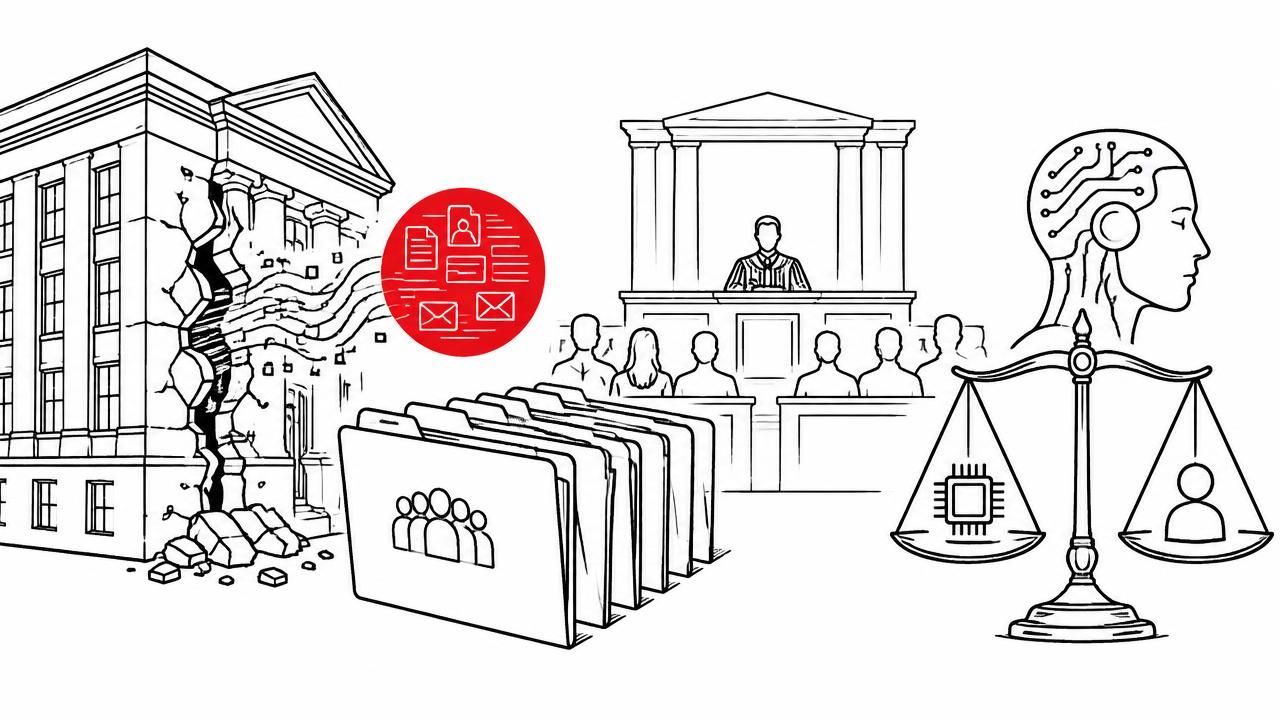
A law firm can approve an AI platform, restrict access to a document repository and require lawyers to review their work. Each decision may be sensible. The harder question is whether those controls still work when the platform searches the repository, creates a new record, passes that record to another service and helps someone act on it.
Consider a client matter with a restriction on how information can be reused. The engagement team records the requirement. A knowledge system indexes the documents. An AI tool retrieves an extract. A connector moves the result into another application. A lawyer checks the final answer. At which point was the client's restriction enforced, and who can show that it remained effective?
This is an illustrative workflow, but the management problem is concrete. Responsibility can become fragmented precisely where the work becomes connected. Security teams may assess access and infrastructure. Knowledge teams consider retrieval and source quality. Risk teams examine commitments and exceptions. Practice leaders supervise the advice. Suppliers define parts of the technical environment. A control that works within one boundary can leave an unanswered question at the next.
That is why legal technology risk deserves attention as a question of how a firm operates. It reaches into the promises made to clients, the authority given to systems, the checks applied to work and the ability to continue delivering a service when something fails.
Greater capability makes those questions more consequential. A system that drafts text needs an appropriate review process. A system that can send a message, change a record or trigger another workflow also needs defined authority.
Everyone needs to understand what it can access, what it can change, when approval is required and how an action can be stopped.
Bringing the accountable people into the same room
Inside Practice is launching two one-day Inside Legal Tech Risk events: New York on 24 March 2027 and London on 5 May 2027. The programs bring together the people responsible for protecting client information, supervising technology and maintaining the delivery of legal work.
The discussion is designed to connect firm leadership, general counsel and risk partners with technology, security, information governance, knowledge, innovation and client-side legal operations. These colleagues encounter different parts of the same workflow. Comparing their assumptions is part of the work.
Both events will examine six connected areas: cyber resilience and operational control; data governance and matter-level protection; AI assurance and infrastructure choices; agent authority and technology supply chains; client assurance and accountable leadership; and the responsibilities that come with bringing AI in-house.
Those themes lead to decisions that are easy to postpone when considered separately.
- Which services must remain available during an incident?
- How should client restrictions follow information into prompts, outputs and connected applications?
- What evidence supports confidence in an AI-assisted result?
- Which supplier changes should trigger another review?
- Who can approve an exception, and who needs to know?
Infrastructure choices deserve particular scrutiny. A more restricted environment may address a specific exposure, while creating additional responsibilities for staffing, testing, maintenance and recovery. Can the complete workflow meet the firm's requirements, including the parts that still depend on external providers?
The same discipline applies to client assurance. A questionnaire answer or contractual commitment should have an operational counterpart: an owner, a control, an exception process and evidence. The program will explore how firms can make that connection in practice.
Faculty is being curated. We welcome contributions that make the decisions visible: anonymised incident and recovery lessons, examples of AI or agent controls, supplier assurance approaches, client requirements translated into working processes, and experience of implementing data governance. Useful contributions should explain the trade-offs and limitations as well as the outcome.
A map for the work between conferences
The events sit alongside LegalTechRisk.com, Inside Practice's new platform for tracking and mapping technology risk across the legal profession. Its purpose is to connect reported developments with the places where they affect legal work, giving leaders a more useful way to explore the questions behind the headlines.
The site brings together curated reporting, weekly briefings, historical dossiers and interactive maps. Its workflow explorer follows a matter from intake and engagement through collection, AI-assisted drafting, agent actions, supervision and delivery to billing, retention and disposal. Identity, access, continuity and suppliers appear as dependencies beneath that work.
The website and the two events are intended to support that continuing work: bringing developments into view, connecting them to operational decisions and creating room for peers to examine how those decisions hold up in practice.
Explore LegalTechRisk.com. Join Inside Legal Tech Risk in New York on 24 March 2027 or London on 5 May 2027. To discuss a contribution or partnership, contact contact@insidepractice.com.