January 16, 2026
AUTHOR Inside Practice
Inside Legal AI Brief: 01/16/26
For the past two years, the legal industry has treated AI the way a toddler treats a marker: with wide-eyed wonder, frantic enthusiasm, and absolutely no plan for what happens when it ends up on the walls.
Because legal AI has mostly been framed as a question of possibility: What can it do? How fast is it improving? Which tools should firms test?
And to be clear: that phase is done. It’s over. The “AI as a fun side quest” era has ended.
Because across the legal market, vendors, law firms, courts, regulators, professional bodies - AI is no longer being treated like an experiment. It’s being absorbed into the infrastructure of legal work.
Which is a huge change, because “experiment” is where you can shrug and say, “Well, that didn’t work,” like you tried making sourdough in 2020. “Infrastructure” is where, if it fails, society starts emailing you like, “Hi, I can’t access my rights today, is the system down?”
And that’s what changes the risk profile entirely.
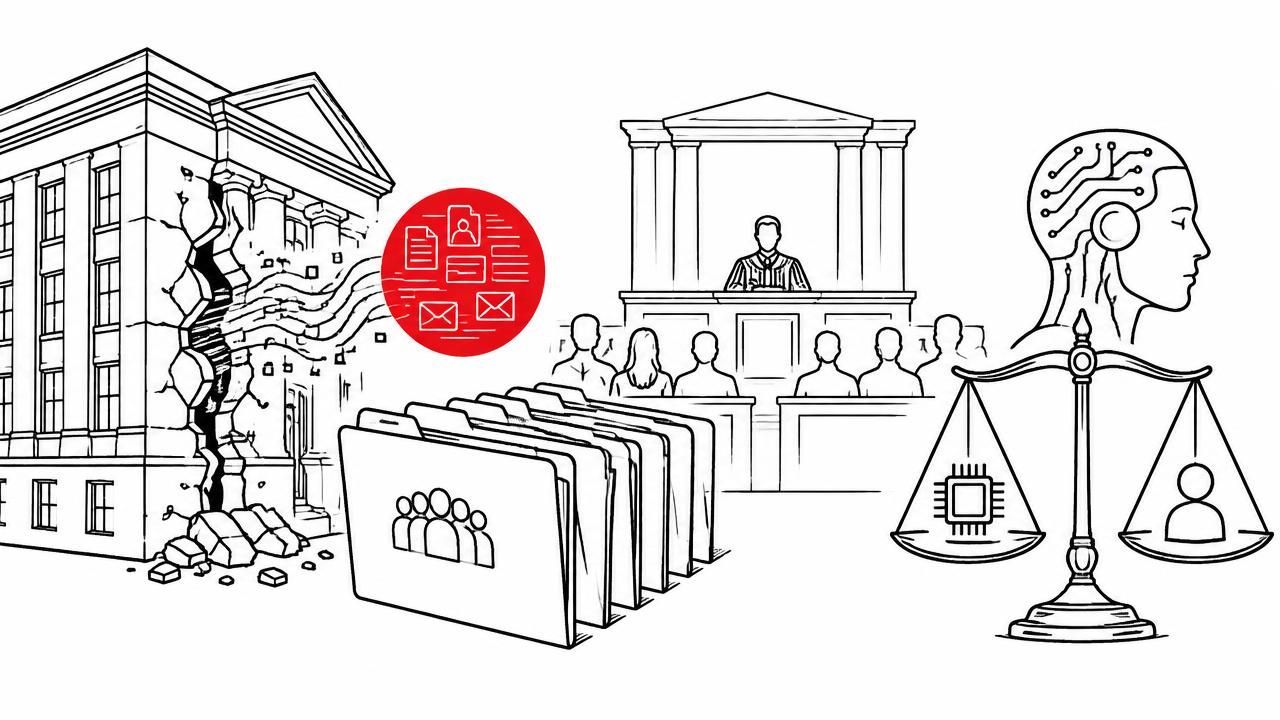
This is no longer a story about whether AI works. It is now a story about whether legal institutions are prepared to control it, govern it, and then, this is the real kicker, live with it.
Because it’s one thing to invite AI into the building. It’s another thing to realize you’ve given it keys, a badge, and a desk right next to the confidential files.

The Inflection Point We’re Already Past
Here’s one of the clearest signals something fundamental has shifted: AI has crossed an internal threshold inside institutions.
Vendors are no longer selling discrete tools, little “helpful” add-ons you can trial and then quietly abandon like a gym membership. They’re selling agentic systems, often paired with pricing models that are basically designed to encourage mass adoption.
Litera’s rapid growth after launching no-cost access to agentic capabilities is a perfect example: remove friction, and adoption accelerates. (Business Wire)
And courts?
Courts are not just watching from a safe distance, stroking their judicial chins and murmuring, “Hmm.” U.S. judges are reportedly already using AI to summarize filings and assist with drafting. (Wall Street Journal)
Which is… significant!
Because once judges start using AI as a convenience layer, that doesn’t stay a “nice-to-have.” That changes how lawyers write, how they brief, what they emphasize, and what they assume will be “picked up.”
And institutional change rarely arrives with fireworks. It arrives through normalization: one more workflow, one more “assist,” one more quiet assumption that the machine is just… part of the process now.
That moment has already passed.
The End of AI Euphoria and the Rise of Scrutiny
Now, investment in AI hasn’t slowed. But it has sobered up.
The market is moving beyond the “try everything” phase, where everyone acted like they were at a tech buffet piling shrimp onto their plate with both hands, and into a phase of discipline. Spending is being redirected toward what you need if AI is going to operate at scale without turning your firm into a liability factory:
- governance and oversight
- security and data control
- reliability and auditability
- integration with knowledge, data, and workflow systems
- and ROI you can actually explain to leadership and clients without sounding like a cult member
And this shift mirrors what enterprise leaders are saying more broadly. McKinsey’s State of AI points to organizations focusing less on experimentation and more on operationalizing AI in ways that survive scrutiny. (McKinsey)
Which makes sense. Because AI is no longer “innovation theater”, where everyone gets to wear a headset and say “synergy” and then go home.
It is entering the same governance conversation as billing systems, pricing models, and client data platforms.
Meaning: boring, consequential, and full of meetings. The true nightmare.
Governance Is Rising, but Fragmenting
If this were a neat story, regulation would be converging smoothly behind adoption. It is not a neat story.
In the United States, AI governance is emerging through state-level activity, which means we’re heading toward the regulatory equivalent of being attacked by a flock of birds: not one clean problem, but dozens of small, frantic ones coming from different angles.
You’ve got legislative developments in Texas (Texas Legislature Online), policy direction in California (Governor of California), and the likely future is layered compliance rather than one national framework.
And in the UK, the signal is different but still consequential: professional bodies like the Law Society are issuing increasingly urgent guidance on pace and risk, even while enforceable standards remain fluid. (Law Society)
So if you’re a firm operating across jurisdictions, the risk is not “no regulation.”
It’s fragmentation.
Which forces governance decisions now, before standards stabilize, meaning you’ll be building the plane while multiple governments are simultaneously arguing about what counts as a wing.
The Quiet Risk: Reliability and Security
Here’s the part that tends to get buried under shiny demos: as AI systems become more autonomous, their failure modes become less forgiving.
Agentic systems introduce new attack surfaces, new manipulation risks, and new questions about containment. And the OWASP GenAI project has started formalizing these concerns, highlighting that agentic architectures demand fundamentally different security assumptions. (OWASP GenAI)
And in legal contexts, those security and reliability questions aren’t abstract “tech issues.”
They are privilege issues. Confidentiality issues. Professional liability issues. Client trust issues.
Because if a system has memory, persistence, and the ability to take delegated action, the question isn’t “Can it draft a clause?”
The question is: What happens when it drafts the clause, stores the clause, reuses the clause, and confidently cites the clause in a context where it absolutely should not?
The industry’s focus on capability has obscured a much harder question:
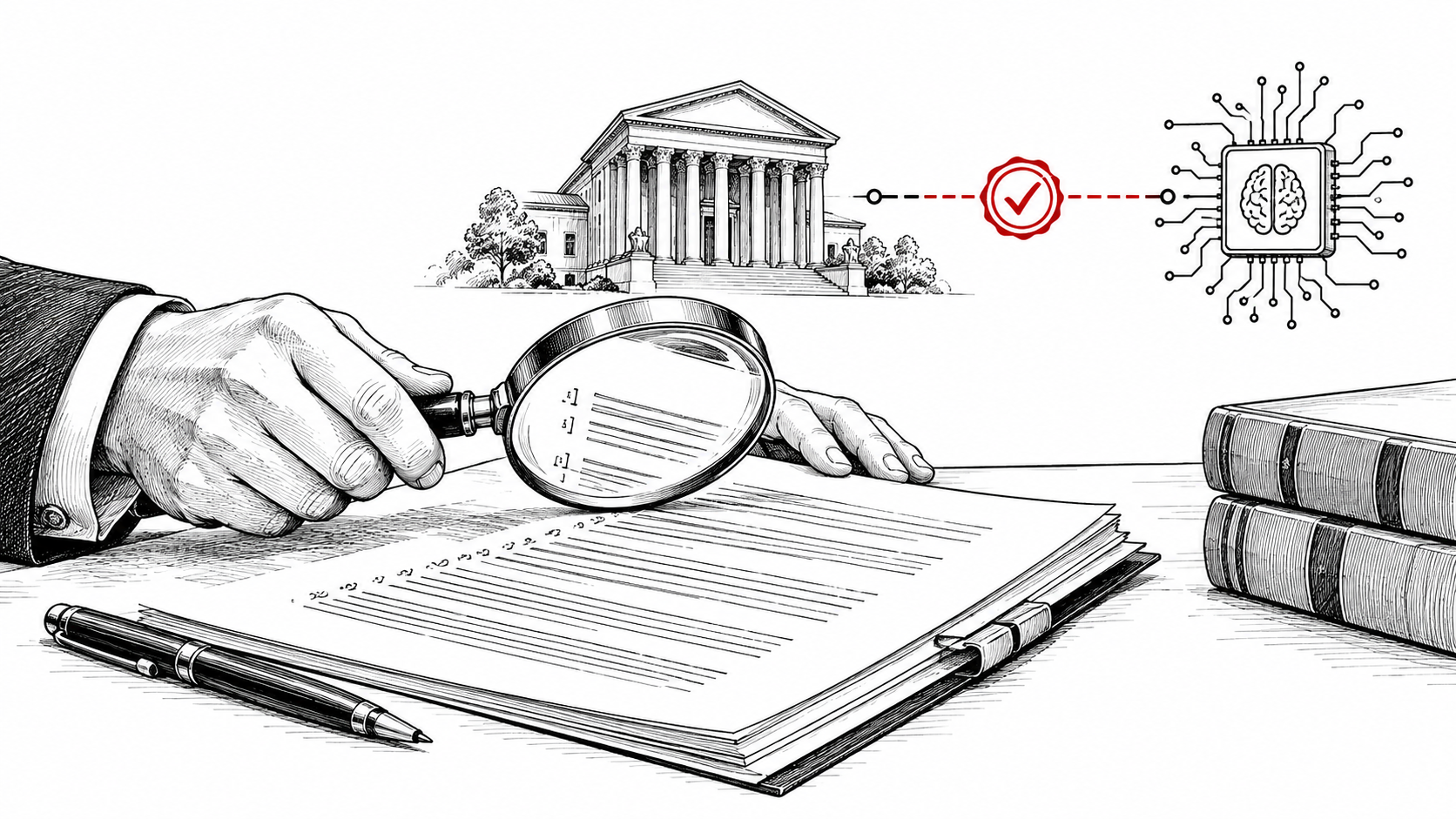
Can these systems be trusted, audited, and governed inside real institutions, the kind with malpractice exposure and ethical duties and clients who do not accept “the robot did it” as a defense?
Workforce Redesign Is Beginning - Without a Map
AI is no longer just augmenting legal work. It is starting to reshape how time, effort, and value are defined.
Some firms are making that shift explicit. Ropes & Gray’s decision to credit associates for AI-related effort is a tangible signal that work design is changing. (City A.M.)
And that’s actually a big deal, because it acknowledges the reality: if AI changes the workflow, you can’t keep measuring productivity using the same old yardstick and then act surprised when everyone’s miserable.
Meanwhile, broader workforce signals, burnout, dissatisfaction, suggest institutions are redesigning work faster than they are redesigning incentives, evaluation models, and professional identity.
So the risk is not “people will resist AI.”
The risk is that work changes, and the definition of success doesn’t.
And that creates a professional environment where the rules are unclear, the expectations are inconsistent, and everyone feels like they’re being judged on metrics designed for a different century.
The Core Insight: Capability Is No Longer the Constraint
Put all of this together and you get one conclusion:
The limiting factor for legal AI is no longer technological capability.
It is institutional readiness.
Readiness to govern.
Readiness to secure.
Readiness to explain AI-mediated decisions to clients, courts, and regulators.
Readiness to redesign work without eroding trust or professional judgment.
Because the next phase of legal AI will not be won by the firms with the most tools.
It will be won by the firms that treat AI as infrastructure, not magic, and invest like it.
Which, unfortunately, is the least glamorous kind of investing. It’s not “Look at our futuristic demo.”
It’s “We built controls, audit trails, policy, security, training, and accountability.”
In other words: not a fireworks show. A foundation. And in law, the thing you build on matters a lot more than the thing you show off.
The Inside Legal AI Brief, is the newly reformatted Inside Legal AI Newsletter.
For more information on Inside Legal AI: www.insidelegalai.com
For more information: www.insidepractice.com
This brief was developed using AI tools in conjunction with proprietary internal research, expert inputs, and established editorial processes.
For more information please reach out to us at contact@insidepractice.com